


Hair Straightener Buying Guide: Plates & Heat
Plate width, plate material and heat range determine which straightener suits a given hair type. Narrower plates (under 25mm) give control for short or layered styles, wider plates speed up thick, long hair. Ceramic and tourmaline plates distribute heat evenly. Adjustable settings between 120°C and 230°C protect fine or damaged strands from excess heat.
Key Takeaways
Plate size determines styling versatility: smaller plates suit short hair, larger plates handle thick hair efficiently.
Ceramic and tourmaline plates distribute heat evenly, reducing frizz and protecting hair from damage during styling.
Adjustable heat settings from 150°C to 230°C accommodate different hair types and prevent overheating delicate strands.
Quality straighteners with proven performance deliver sleek results while maintaining healthy, shiny hair long-term.
What Should You Check Before Buying a Straightener?
Plate material and heating technology determine whether a straightener suits curly, damaged, or fine hair. A proper hair straightener buying guide starts there, because the wrong plate type creates frustration and, over time, visible damage. Matching the tool to hair type and styling goals, rather than picking the first option on the shelf, protects both the investment and the hair itself.
Four factors deserve attention before any purchase:
Identify hair type first. Curly, coarse, fine, or chemically treated hair each responds differently to heat and plate texture.
Match plate technology to styling goals. Steam straightening, standard ceramic, and other finishes behave differently on frizz, shine, and heat damage.
Weigh the ceramic vs titanium question. Comparing a titanium vs ceramic straightener matters most for those with thick or stubborn hair needing consistent heat distribution.
Check the brand's selection standards. Hair Traders Australia curates its styling tools for proven performance, thoughtful formulation, and the long-term health of hair.
Is a Professional Straightener Worth the Cost?
A professional hair straightener typically offers steadier heat control and more durable plates than entry-level models, reducing repeated heat exposure. Hair Traders Australia prices its curated tools fairly, so quality performance doesn't require premium spending. Shoppers get salon-calibre results without sacrificing budget or hair health.
How Do You Match Plate Size to Heat?
Plate size and heat setting work together, not separately. A proper hair straightener buying guide narrows the decision to four practical factors: plate surface material, plate width, available heat levels, and overall cost. Getting the width-to-heat ratio wrong causes either dragged, uneven sections or scorched ends. Shoppers should treat the two as a single choice.
What plate width suits which hair length?
Shorter, finer hair responds best to narrower plates paired with lower heat settings. Less surface area needs less thermal force to smooth. Longer or thicker hair benefits from wider plates run at higher temperatures, covering more strands per pass and cutting down on repeated heat exposure.
Narrow plates (under 25mm): suited to short styles, fringes and precision work at lower heat
Mid-width plates: versatile for shoulder-length hair across moderate heat levels
Wide plates: built for long, thick hair needing higher heat for efficient coverage
Does cost affect heat control accuracy?
Cost often reflects how finely a tool regulates temperature, not just brand prestige. A well-built professional hair straightener typically offers multiple precise heat levels rather than one fixed setting, giving finer control across different plate widths.
Hair Traders Australia offers friendly, reliable support to help shoppers work through these plate and heat decisions with confidence. The brand's commitment to value pricing also extends across its styling tool range, helping customers match the right heat settings to their hair without overspending.
What Common Mistakes Should You Avoid When Buying?
Most buyers lose money by misjudging plate quality, not by overspending on features. A hair straightener buying guide worth following starts with understanding what lies beneath the surface finish, since appearances rarely tell the full story.
Why does a "ceramic" straightener still damage hair?
Thin ceramic coatings often fail quietly. That protective layer wears away with repeated use, exposing the metal underneath to direct contact with hair. Once that happens, heat distribution turns uneven, and strands absorb hot spots instead of consistent warmth. Shoppers comparing titanium vs ceramic straightener builds should check whether plates are solid or simply coated, since coating depth rarely appears on packaging.
Avoiding this trap takes a few deliberate checks:
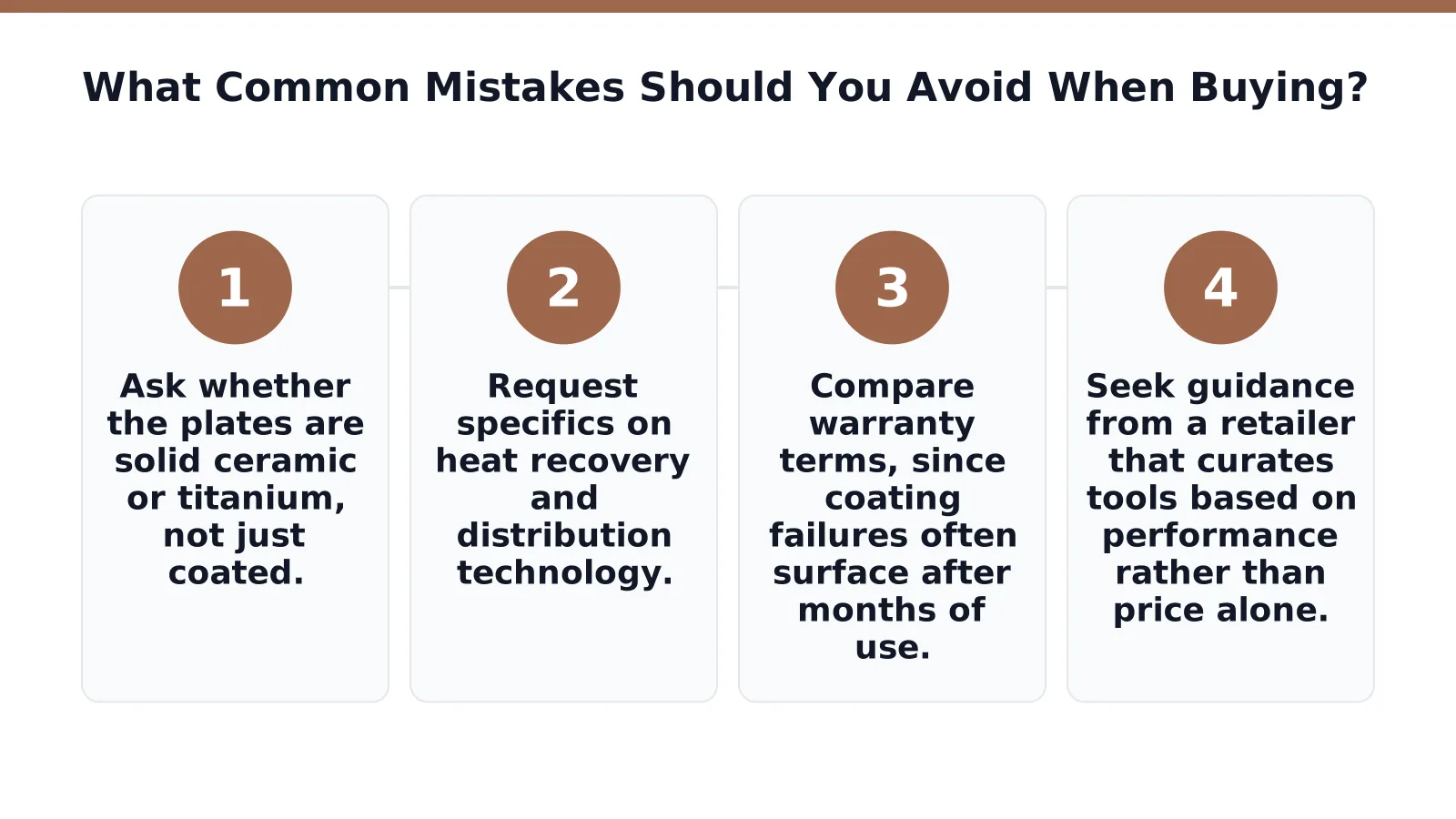
Ask whether the plates are solid ceramic or titanium, not just coated.
Request specifics on heat recovery and distribution technology.
Compare warranty terms, since coating failures often surface after months of use.
Seek guidance from a retailer that curates tools based on performance rather than price alone.
Selecting a well-made professional hair straightener reduces long-term damage risk considerably. Hair Traders Australia curates styling tools and hair care products chosen for proven performance. Thoughtful formulation, limiting the chance of ending up with an underperforming iron. Friendly, reliable support also means shoppers can clarify plate construction and heat settings before committing, turning guesswork into an informed decision.
FAQ
What plate material gives the most even heat distribution?
Ceramic and tourmaline plates distribute heat evenly across the surface, reducing frizz and protecting hair from damage during styling. This makes them a reliable choice over basic plate finishes for consistent, salon-calibre results.
Which plate width works best for thick, long hair?
Wide plates suit long, thick hair, covering more strands per pass at higher heat settings. This reduces the number of passes needed and cuts down on repeated heat exposure to the hair.
Do I need to spend a lot to get a quality straightener?
No. Hair Traders Australia prices its curated styling tools fairly, delivering salon-calibre performance and healthy, shiny results without requiring premium spending.
Conclusion
In closing, selecting the right hair straightener hinges on understanding how plate size, material composition, and heat control work together to deliver results aligned with your hair type and styling goals. By prioritising tools engineered for even heat distribution. Temperature precision, you invest in both immediate styling outcomes and long-term hair health. Hair Traders Australia curates professional-grade straighteners chosen for their proven performance. Thoughtful engineering, ensuring your at-home styling achieves salon-quality results whilst supporting the integrity of your hair.